Responsible operations

What the process itself provides

This page records only measures described in the company brief: chimney treatment on thermal plant, recovery from scrap and electronic waste, and metal taken to 99.9% purity. No environmental rating, audit, or policy framework is claimed.


Three facts, not a scorecard

Institutional readers should treat the items below as engineering features of the equipment and flowsheets, not as an ESG programme. Certifications, emissions factors, and third-party ratings are not published here.

01

Cyclone and bag filter

Mining roasting furnaces (600–900 °C) and mining drying furnaces (100–400 °C) are specified with chimney treatment by cyclone and bag filter. Both units run with continuous inlet and outlet. The roasting furnace uses alumina-brick refractory; the dryer is non-refractory.
02

Scrap and electronic-waste recovery

Two electrolytic routes take secondary feeds: waste scrap metals, melted and cast as anodes; and electronic waste and recyclable products that contain precious metals, separated before the anode is cast. Valuable metals are extracted during electrolysis.

The same circular approach extends to electric arc furnace dust from steelmaking, with zinc recovered by flotation, leaching, and electrowinning. EAF dust processing.

03

99.9% purity

Copper and zinc from the leach-and-electrowin route, and gold, silver, platinum, palladium, and related metals from the secondary routes, are produced at 99.9% purity. Cathode metal is melted and cast as ingots where the flowsheet requires it.

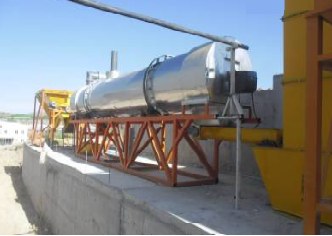
Outdoor rotary dryer with yellow discharge housing for gas treatment
Rotary dryer with discharge housing — chimney treatment is specified as cyclone and bag filter.

How to read this

Bag filters and cyclones are abatement hardware on the roasting and drying furnaces. They are not a statement of measured stack performance. Recovery from scrap and e-waste is a process capability, not a volume claim. Purity of 99.9% is the figure given for the electrolytic products named above.

Waste ponds appear on the flotation plant list as part of the machinery line (sludge pumps and waste ponds). Their design, lining, and permitting are project-specific and are not described further in the source brief.

Nothing on this page should be copied into an ESG annex without primary evidence from the company.